Computational analysis lets science fiction become science reality
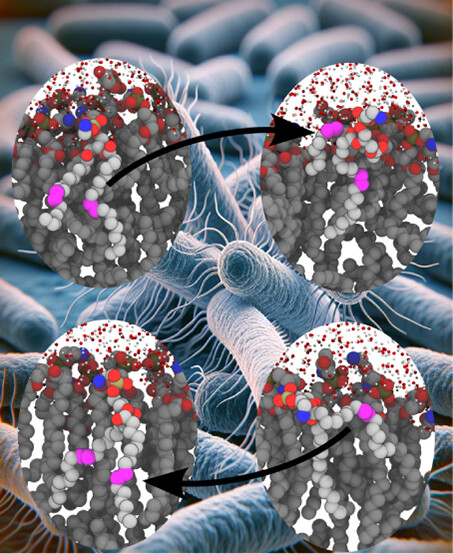
Strange things can happen in science, but stranger things appear when we make science fiction a science reality.
Computational biology allows researchers to look at models that would never exist in nature but still offer valuable insights into the world around us. This was the leading idea behind a new study from the Vermaas lab at the MSU-DOE Plant Research Laboratory (PRL), published in ACS Omega, which looks at the formation of cell membranes.
This study also has implications for health science and why trans fatty acids may be so bad for us.
Cell membranes are barriers which protect the cell from harmful agents, while letting good proteins in. It acts like a force field, with gates that can be opened to let goods flow between the inside and the outside.
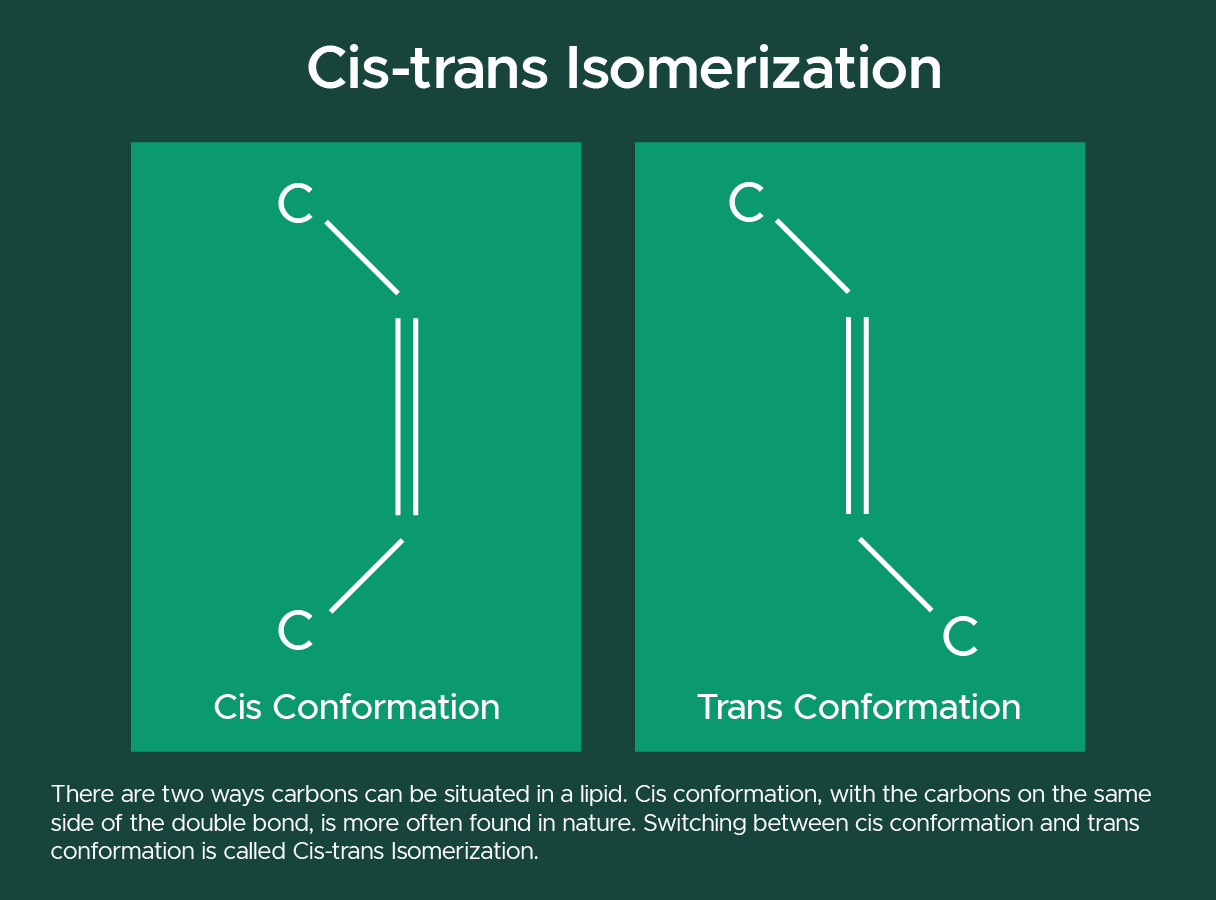
The cell membrane is made up of a bunch of lipids which each contain two carbon atoms, connected by a double bond.
There are two ways these carbons can be situated in the lipid. The formation found most often in nature is known as cis conformation, and it has the carbons on the same side of the double bond. There is also the lesser seen trans conformation, which has the carbons on opposite sides of the double bond.
“Specifically in bacteria, double bonds play a role in how the membrane adapts to certain external factors like stress,” said Saad Raza, former Vermaas lab postdoctoral researcher and first author on the paper. “If the double bond is in a cis conformation, it makes it easier for molecules outside to diffuse inside the membrane.”
However, in trans conformation, it’s more difficult for things to pass through the membrane. Only some of the bonds need to switch to trans for this to happen. This switch is called cis-trans isomerization.
The study takes the phenomenon of cis-trans isomerization to the extreme. What if all of the bonds were in trans conformation, a phenomenon that would never occur in nature?
The researchers found that with all bonds in trans formation, it made it much harder for the cell to interact with enzymes. Broadly, cells interact with enzymes to get stuff done in your body. Enzymes need a bonding site on the membrane to attach to, which appear on the membrane surface much less often in trans conformation.
“Part of the reason why lots of trans fats might be bad for you, mechanically speaking, is they don't come up to the surface, which means that enzymes can't do stuff with it, and so your metabolism kind of gets gummed up,” said Josh Vermaas, assistant professor in the PRL and the Department of Biochemistry and Molecular Biology.
There is more to be discovered with how these mechanical mysteries work, but the Vermaas lab is leaving it here.
“One of the clear limitations for this paper is we did something very artificial,” Vermaas said. “We switched every single double bond around, which is not real. You have to take it with a grain of salt for what does this actually mean.”
That’s the power and limitation of computational biology: it lets us see what a science fiction world would look like, under the laws of our real world.